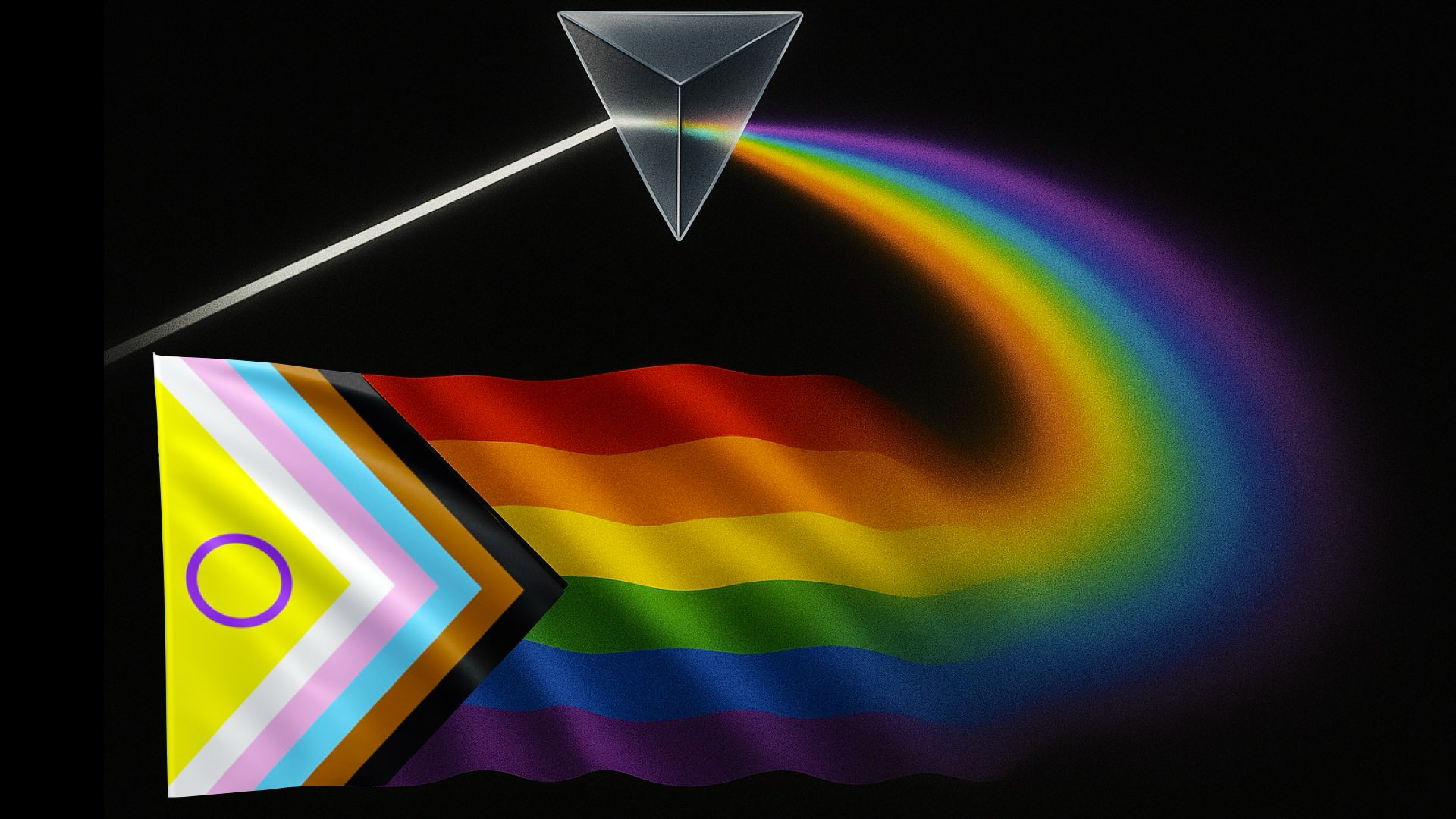
Welcome to episode 35 of The Spectrum. This was recorded on February 19, 2026. Today we’re going to talk about the phobias: homophobia and transphobia, what they are and how people express them.
This is intended for the straight, cisgender person who hears the word but may not have a real sense for what it means and how it gets applied. I’m pretty sure anyone in the LGBTQ community already has a good sense of the words. Anyone who is out has almost certainly experienced it at some point.
We’ll finish up by looking at some concrete examples of situations and try to decide if it’s phobia or something else. Like all human behavior the edges are fuzzy and sometimes the answer isn’t certain.
The reason for this episode is because I got a fair amount of pushback, overwhelmingly from straight, cisgender men that what I reported in the last episode, “Polite Words, Real Exclusion” wasn’t homophobia.
Let’s start with “homophobia” as defined by the Merriam-Webster dictionary: “discrimination against, aversion to, or fear of homosexuality or gay people”. The definition of “transphobia” is similar: “discrimination against, aversion to, or fear of transgender people”.
Those are pretty simple definitions and they are also pretty broad. In the last episode, the reason I labelled B’s behavior homophobic was that he reacted to two lines in my email signature as being overtly gay and trans friendly and he didn’t want any part of it. He labelled it politics and ideology but the roots of those things are phobic in nature. He chose to avoid even communicating with me because I was visibly LGbTQ friendly. That sounds like aversion or fear to me. I also that it’s pretty straightforward. There isn’t any need for contorted logic or complex diagrams. He read two lines in an email and he decided I was too gay to accept help from.
That’s a pretty minor experience. My help had been offered to him and once confronted with overt gayness he fled the scene. I’m angry at him for his actions but other than that, it didn’t harm me.
At the other end of the extreme is Matthew Shepard as just one example. Matthew was killed because he was gay and he is not an isolated case. We don’t have good statistics on this thanks to inaction or even overt hostility on the part of the Federal government but dozens of people are killed each year in the US because they are gay, transgender or non-binary. And, for every person killed there are many more that are physically hurt.
This is extreme homophobia or transphobia. People are hurt or killed just for being visible in the world.
Between these two extremes are a wide range of behaviors that can still affect someone’s life profoundly.
How many people were not given job offers because they were perceived to be gay? We’ll never know but we know it’s happened and continues to happen even with non-discrimination laws in some arts of the country. The same is true for transgender and non-binary people. I personally know transgender people who were fired from their jobs after coming out. And, if they weren’t fired they were often the target of harassment in the workplace.
How many people were denied housing because the were perceived to the LGBTQ? Again, we’ll never know but there are documented cases that it has happened.
All across the country school and public libraries are under attach for having LGBTQ friendly material in their collections.
And phobic behavior isn’t always directed right at the gay or trans person. Sometimes it’s directed at the other people in their lives. I know of children that were harassed in school because they had lesbian moms.
Phobic behavior can bubble up from the individual to institutions. In the episode on McCarthyism we looked at how the Federal government targeted gay people and in the episode on a Brief History of Pride we learned that you could be arrested for being gay in many parts of the country. The people running the Federal Government in 2026 are actively involved in transphobic attacks right now.
Organized religion is a big contributor to both trans and homophobia. I’ve only done the research with respect to Christianity but there is a long history of using religion to discriminate and demean LGBTQ people. The claim may be that these Christians are merely doing what the Bible tells them but as we saw in the episode on how some Christians use religion to justify discrimination against transgender people, they misinterpret and misrepresent what the Bible says to justify the positions they already had.
One important question is what lies at the root of these phobias. Many people, including me, think it’s the “ick” factor – a feeling of disgust at seeing something or even thinking about something. It’s a visceral reaction and it’s easy to give in to it. I’ve heard people say, “I don’t want to see two men kissing. It’s gross”. I’ve seen the reaction that some people have to a transgender person that just came out. It’s not a rational reaction. It’s a gut reaction. I get it, watching straight people kiss can be, well, disgusting. But it goes beyond that. Even something as simple as holding hands can elicit that “ick” factor.
The good news is that the “ick” goes away with exposure. Once you realize it isn’t directed towards you, you can relax and soon, it doesn’t bother you and even if it does, you can politely ignore it. I’m not a big fan of beans. Actually, I find things like pinto and kidney beans disgusting. But, as an adult, I’ve learned to eat them when I can’t avoid them. It’s part of being an adult and learning to get along with others. I’m not going to seek them out but if I have to eat them I can do it without gagging. I still think they are kind of gross but I know it’s not going to kill me to eat them just like it isn’t going to kill you if you have to interact with an out gay or transgender person.
There’s one other nasty source of phobic behavior and that’s from the person who has been brought up to hate people that are gay or transgender but recognizes that they themselves are gay or trans. This recognition might night even be at the conscious level but it manifests in being overtly and overly anti-gay or anti-trans. These people don’t have the “ick” response but they have been taught that LGBT people are broken and by persecuting those who are out and open try to convince themselves they are “normal”. These people can do remarkable damage when in positions of power.
How do you react when confronted by something overtly gay or trans?
Are you like B in the last episode where you are ok so long as we don’t do anything to remind you they are different? Maybe you handle it better than B and don’t run away but are uncomfortable during the encounter. That’s at least a little bit phobic. It’s ok. If the cause is just that physical “ick” reaction, it’s pretty easy to get over that. It’s only when people try to come up with justifications to be ok for feeling that way that this becomes truly dangerous.
Like the song, “Everyone’s a Little Bit Racist” from the musical Avenue Q, everyone’s a little bit phobic. I have to admit, watching men kiss either women or men is a little gross. I’m not attracted to men so it’s not surprising, but that little “ick” response was easy to get over because they aren’t doing it to me so why should it bother me when they do it with someone who clearly wants to be doing it with them?
Being a little homophobic or transphobic doesn’t necessarily make you a horrible person. But, it does mean you have some room to grow and be a better person. It only becomes terrible if you use it to justify discrimination or commit violence. It’s only a problem when you allow it to find justifications to support that bias. There are plenty of reasons not to associate with someone in this world. But, those decisions should be made based on individual behavior and not who the person is. LGBTQ people are not inherently bad and they are not broken. They just happen to be different from most people either in their attraction or their identity. That’s it. Excluding people because of that is just plain wrong.
Now, let’s look at some real world examples.
Some members of our local school board are regularly heard to rail against “grooming”. This is their belief that members of the LGBTQ community are actively recruiting – basically trying to make people gay or trans. They apply this word to any activity that tries to create a supportive environment for LGBTQ students.
This is clearly phobic. It tries to prevent any overt acknowledgment of LGBTQ people being visible. It accuses LGBTQ people of essentially being pedophiles. Grooming doesn’t exist – except in the straight, usually religious community where they run conversion camps designed to stop people from being gay or trans.
Now, let’s say you have a neighbor who happens to be gay. Let’s call him Bob. You’ve loaned Bob tools on a few occasions and they never get returned. When Bob asks to borrow another tool you refuse. Is that homophobic? No, not if your sole motivation for refusing was Bob’s record of not returning tools. Your refusal had nothing to do with Bob being gay and everything to do with Bob’s track record on returning borrowed items.
These are pretty clear cut examples, but human behavior is complex and our view of a person is a blend of many factors. Sometimes it’s hard to separate out the real motivations for our actions, especially when there are multiple sources.
Let’s take this example: You have a coworker whom you’ve known for a few years. During that time you’ve often had different viewpoints about the issues your team was facing. One day, your coworker reveals he is a transgender man and will be transitioning. Over the next few months, you find yourself always opposing this coworker’s ideas. Is that transphobic or is this just someone whose professional ideas you just don’t agree with? I don’t know but it’s likely both are contributing factors. Your previous history may predispose you to an opposing viewpoint but the person’s transition has now pushed you to not even really considering the opposing viewpoint.
My suggestion, no matter which side of this you are on, either as the accuser or accused, is to think about your motivations. I never told B I thought his actions were overt homophobia though I did make the accusation here on the podcast. Even then, I looked for other motivations that could account for his actions. Each path I went down led me to the same root cause. If I were to make the claim to him, I’d start out by laying some groundwork, asking some questions that would hopefully lead to the conclusion. I didn’t because he was clear he wanted no contact but if this were someone I wanted to reach, say an acquaintance or family member, I’d try to educate them and not accuse them of being a bad person. Just as with racism and sexism, people don’t want to believe they are capable of homophobia or transphobia, especially when they are basically supportive. They can be difficult conversations to have but people need to be aware of the consequences of their behavior.
I was surprised at how much pushback I got from the last episode from the straight viewers. They were ready to give different motivations to B’s actions. And, let me be clear, B is free to associate with whomever he wants. There is no reason in the world he had to accept my help that was indirectly offered through a friend. But, his motivation for not accepting my help was, almost certainly, homophobic in nature. He was only willing to interact with my so long as he didn’t have to be confronted with my gayness.
All of us, need to recognize what lies at the root of of our reactions. If you think “ewww!” when you see a same-sex kiss or public display of affection; if you think “gross” when you think you see a transgender person, recognize that you don’t control those reactions and you don’t need to apologize for having them. Unless you were taught to have them, it’s just your own biology reacting to something that isn’t for you. That’s fine. It’s only when you let that reaction bleed into how you deal with people that it becomes a problem. With time, if you don’t dwell on it, the reaction will go away as you realize that this doesn’t affect you.
Thanks for watching and I welcome your comments on the subject. I’m in the process of scheduling some interviews for people willing to share parts of their stories. If you would like to share your story, positive or negative, please reach out to me at spectrumpodcasthost@gmail.com. Our real-life stories can help to humanize our issues for the wider public.
Until next time, take care.
 The Spectrum
Leave a comment