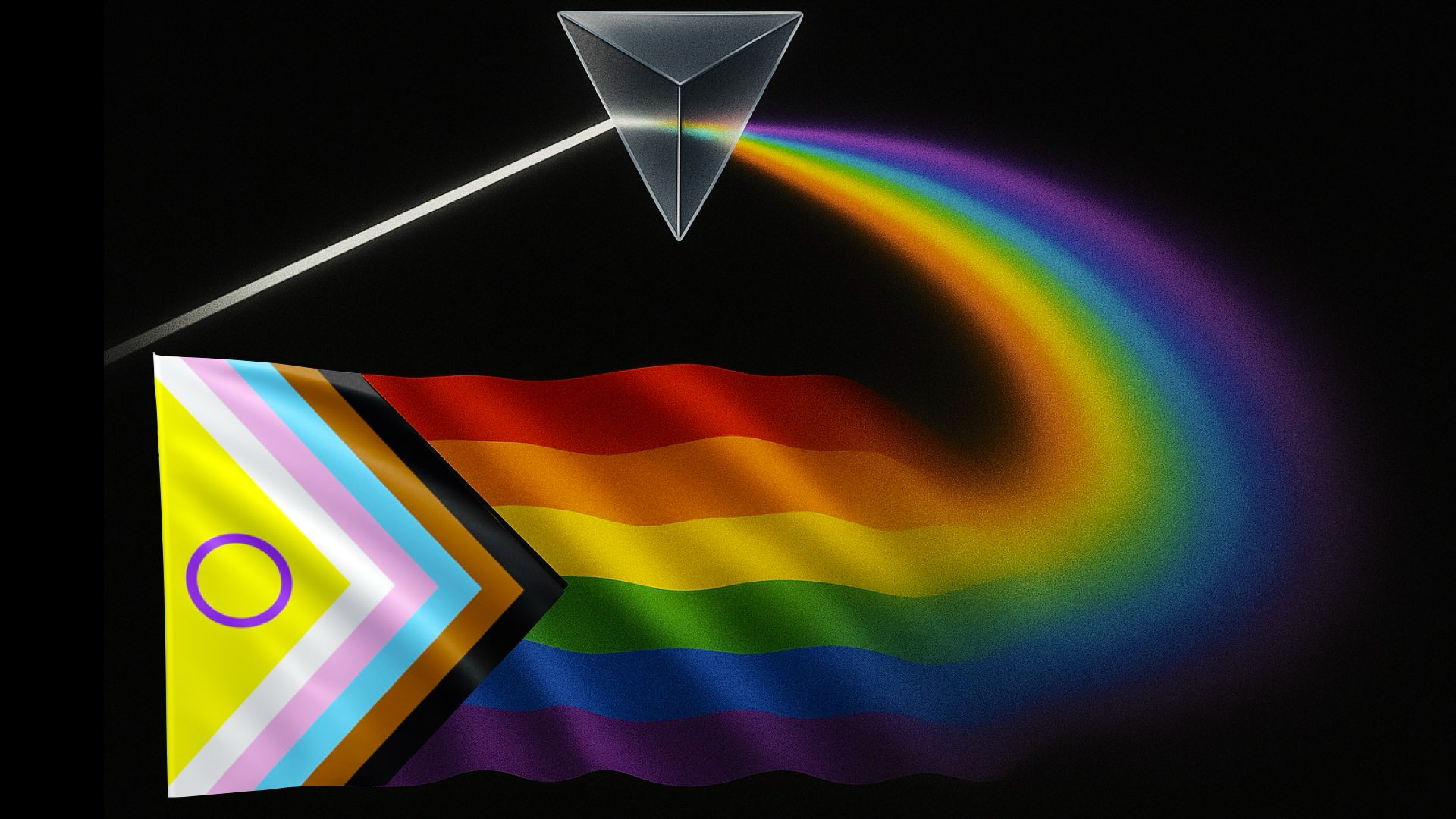
Hello, and welcome to episode 23 of The Spectrum. Todays’ episode is kind of a coming out guide for the straight person. No, it’s not a guide to help straight people come out. It’s all but axiomatic that straight people are out. What this is is a discussion to help the straight, cisgender person understand what coming out means to the LGBT+ community and why it’s so important.
Before we get to that, I’d like to ask for your help. The motivation for this podcast is to humanize the discussion about LGBT+ people. If you find this useful and you are watching on YouTube, please like and subscribe. I hate to be like those YouTubers pushing people to do that but the people that are not happy about LGBT+ people have not been shy about disliking the videos. If we want to get the word out to people, we need to make sure that YouTube will show the video to them and liking and subscribing are the best way to get YouTube’s algorithm to do that. Also, please share the episodes to your social media. Thanks for that little diversion and now, back to our subject.
Earlier, I used that word “cisgender”. Cisgender is the opposite of transgender. It describes someone whose gender and physical sex align. Most of the population is cisgender and most of the population is straight or attracted to someone of the opposite sex. But those that are neither straight nor cisgender have to come out. If you aren’t both straight and cisgender then you are somewhere in the LGBT+ alphabet.
Coming out is the act of telling someone that you are some combination of LGBT+. That’s it. It isn’t complicated but underneath that simplicity lies a powerful statement about identify and honesty.
The things I’m going say are my own opinions but they were formed from my own experiences and from discussions with others. That being said, there are some gaps in those discussions. In particular, I haven’t had a lot of discussion with non-binary or gender-fluid people. I have never knowingly met an intersex person and I’ve only had this discussion with one asexual person. Because of that, I can’t generalize too far. I’m going to restrict my comments to lesbian, gay, bisexual and transgender people. If you are a member of the LGBT+ community and what I’m saying doesn’t sounds like it resonates with your own situation, leave a comment on YouTube or contact me on the website at spectrumpodcast.org or via email at spectrumpodcasthost@gmail.com and we can talk about a followup episode.
For most LGBT+ people, coming out starts with coming out to yourself. That’s a big first step. You can’t come out to anyone else before you come out to yourself. There are many people who spent years trying to deny or suppress who they were. It wasn’t until they literally stopped living in denial that they could accept who they were. That’s a big first step. It’s not possible to be honest with anyone else until we can be honest with ourselves.
I’ve spoke with people who said that coming out to themselves was basically a non-event and I’ve spoke with people who agonized for years, even decades before they were willing to accept who they were. Those that struggled with the decision said that it felt like a weight had been lifted from them when they were finally willing to come out to themselves. And, universally, that group came from families and situations where a stigma was attached to being gay or transgender.
I’ve spoken with people who said they knew who they were as children and I’ve spoken to people who didn’t understand who they were until adulthood. Some were even in their 40’s. I’m not sure the group of people I’ve spoken with over the years is large enough to be statistically significant but If I had to generalize, I’d say that gay men tended to know who they were at a younger age then lesbians. It’s not universal and there is a lot of variation but on average, among the people I’ve spoken with, that holds true. It also seems that people born more recently tend to come out to themselves earlier, probably because of progress that the gay rights movement has made and how much more visible gay people are in society and so they recognize themselves in others. This is a big part of the reason why regressive elements within our society don’t want visibility for LGBT+ people.
For bisexual people it’s complicated. It was often true that people came out to themselves as bisexual as a step along the way only later, after becoming more comfortable with the idea, realizing that they really were gay or lesbian. That isn’t to say there aren’t bisexual people, but at least in the 90’s and early 2000’s this was not an uncommon progression. My suspicion is that it happens less today for the same reason that people come out earlier. People don’t need the safer crutch of calling themselves bisexual. Of course, there are plenty of bisexual people out there. I’m not trying to imply there aren’t. But, some people weren’t willing to attach the label of gay or lesbian to themselves and opt for the bisexual label because it felt safer for them.
I’ve spoken with transgender people who knew from a very young age who they were. I’ve also spoken with those who did not understand what they feeling until well into adulthood. Again, I think understanding tends to come at a younger age today because information is more readily available.
After coming out to yourself, what’s next? That depends a lot on circumstances. For many people, especially people older than me, it wasn’t safe to come out to anyone who wasn’t a trusted confidant. Coming out could mean the loss of a job, but after Stonewall, people began to recognize the value in coming out publicly. By telling people who they were it said they weren’t going to be dishonest about themselves. It meant they weren’t going to let others project shame onto them and that they were going to live their lives openly. We live in a society that has made a lot of progress but also is facing a period of pushback from regressive elements. It’s more important now for people who can do so safely to be visible in the wider community.
For the transgender person, it’s more complicated. It’s still the same in that the transgender person wants to live an honest life and not hide who he or she is. But, the process of that honesty means presenting what was often an entirely hidden part of them to the world. Almost every transgender person I’ve spoke with felt like they were living a lie until they came out. And, while that is true for many gay people as well, it seems to have a larger impact on the lives of many people, perhaps because so many social interactions have an element of gender to them compared to the number of encounters that are sexually motivated.
Some transgender people are lucky enough to blend in. Although they may have come out to friends, family and coworkers prior to their transition at some point in their life, their past may no longer be physically obvious, especially for those that transitioned younger. For someone in that position, coming out might be saying more about the past than the present where for lesbian, gay and bisexual people, coming out is about the present. One way to think about it is that for some post-transition transgender people, coming out is about who they were where for lesbian and gay people it’s about who they are. But, some transgender people are not lucky enough to blend in so that their past is more obvious. For these brave people, every day, every encounter with someone new, is a coming out experience.
I suspect that it’s a similar process for a nonbinary person except that if they want people to use appropriate pronouns, then they pretty much have to come out. If they don’t the people they encounter are going to assume one gender or the other.
For asexual people, they can choose to come out to others or not. I doubt there’s an asexual equivalent to gaydar or gendar that people in that community have to recognize others. Even so, I’m sure there are people who do come out to people that are important to them because they want them to know who they are.
One thing is clear, for many, but not all LGBT+ people coming out to others is up to the person. For some it isn’t. I’m reminded of something a black lesbian said. She said that she had no choice about being recognized as black. It was literally on her skin. But, it was her choice about whether to come out as a lesbian. That gave her a level of control and safety about revealing her sexuality that she never had about her skin color. That’s true for a lot of us in the LGBT+ community. We can choose when and to whom we come out.That gives us a level of safety that not all of our community has.
Coming out is not usually a one and done thing. Many people choose only to come out to those they trust. Changing jobs or moving can bring a whole new set of coming out encounters. And, sometimes even coming out to ourselves isn’t a single step. As we grow and understand ourselves better, our understanding of ourselves changes, like the bisexual man who realizes he is really gay. Or the lesbian who finds out there are some men she can be attracted to. Sexuality and gender are complex and being honest and open with ourselves is not always easy in a world where persecution is so often attached to those that do come out.
So, why do I think that being out is important? I think it humanizes the subject for people. Being gay or trans suddenly stop being an abstract topic and affects someone they know. And perhaps someone they care enough about to influence their thinking. If someone comes out to you, it probably means they trust you enough to share this, especially if that person is in a group that is under attack by a part of our society like transgender people are in 2025.
Unless told otherwise, respect that person’s trust. It’s their story to share, not yours. Nobody should out another person without permission, especially if doing so puts that person at risk. Unfortunately, in today’s world, being out still caries some risk, especially for transgender people so be mindful of that.
In closing, coming out and being out are all about honesty. It’s about claiming our space in society and about not letting others tells us force us to hide on the fringes of society.
If you are a straight person, I hope you found this useful. You never have to come out as a straight person so unless you have some analogous situation in your own life, it can be hard to understand why it is important to us.
If you claim one or more letters of the LGBT+ alphabet, who you come out to is up to you. Even if you are are a transgender person whose past may remain more visible, it’s up to you who you tell even though many people think it’s ok to invade your privacy. It’s ok to tell them it’s none of their business if you don’t want to talk about it. While most of us think that coming out is important, we don’t know your personal situation. It’s ok to be out to just those you trust. There is no requirement to be waving a Pride flag every moment of every day. But, if you can, then you can help make the world safer for others by sharing who you are with those around you.
If you have a story about LGBT+ life you would like to share, reach out to me at spectrumpodcasthost@gmail.com. If you have something you would like to share about coming out, especially if I missed something you think is important, let me know.
Until next time, take care!


 The Spectrum
Leave a comment